
A south-facing balcony in Warsaw or Wrocław during July can reach container substrate temperatures above 35°C in direct sun. Most ornamental plants — impatiens, petunias, standard begonias — need daily watering under these conditions to survive. Drought-tolerant native species from Poland's driest habitats cope with this without supplemental irrigation, provided their substrate and container setup match their needs.
What drought tolerance means in practice
Drought tolerance is not the same as drought indifference. Even the most xeric native species needs establishment moisture in its first season. The tolerance kicks in after the root system has adapted to the specific substrate and container. A newly potted Sedum acre will still wilt if left without water for two weeks in July; one that has been in the same container for two full seasons will survive the same period without obvious stress.
The adaptation mechanisms differ between species. Succulents like Sedum store water in leaf tissue. Deep-rooted species like Salvia pratensis reach moisture lower in the substrate. Mat-forming thymes reduce leaf surface area exposed to sun by growing densely and low. Understanding which mechanism a plant uses guides decisions about container depth and substrate composition.
Sedum acre — biting stonecrop
Sedum acre is native across Poland on dry, exposed sites — rocky outcrops, sandy banks, old walls, and dry roadsides. It is one of the few truly succulent species native to temperate Poland. In a container, it requires:
- Full sun — it does not bloom reliably in shade
- Very fast-draining substrate — at least 50% coarse grit or sand
- Minimum container depth of 10–15 cm
- No added fertiliser — nutrient richness causes soft, fungal-prone growth
The yellow flowers appear in May–June. After flowering, the plants form dense mats of small fleshy leaves that remain green through the growing season. Sedum acre spreads vegetatively; cuttings root with minimal effort on almost any substrate.
Origanum vulgare — wild marjoram

Origanum vulgare grows naturally on dry slopes, roadsides, and woodland margins across lowland and upland Poland. The plant's adaptation to drought comes partly from its deep woody base, which retains moisture, and partly from its aromatic oils — the same compounds that give it culinary value also reduce water loss through the leaf surface.
In containers, wild marjoram performs best in substrate with pH between 6.5 and 7.5. The flowering period — July to September — coincides with the driest part of the Polish summer. During this time, established plants can go two weeks without rain or watering without losing bloom quality. (Source: Image documentation on Wikimedia Commons, Iifar, CC BY-SA 3.0)
Thymus — thyme species
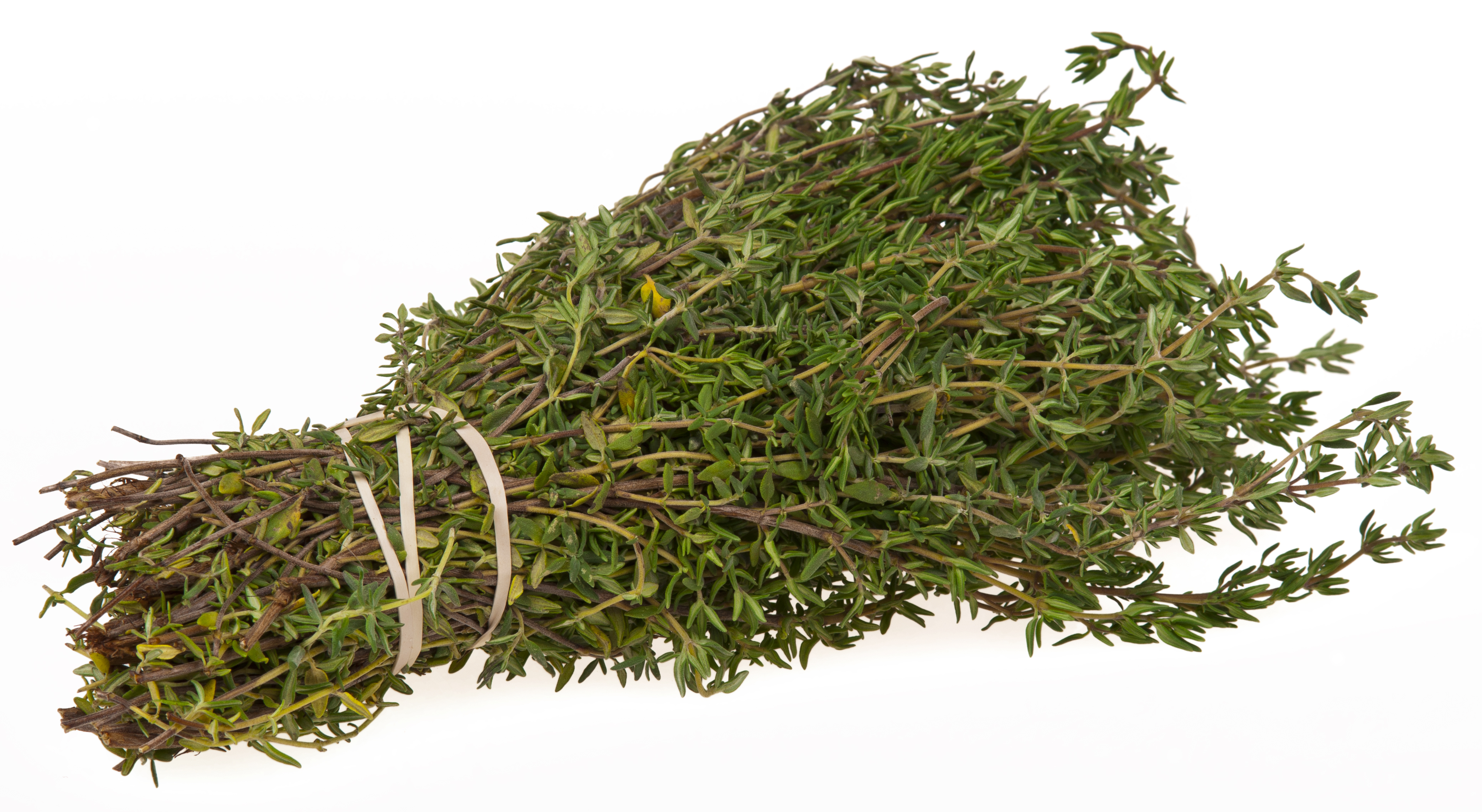
Poland has several native Thymus species. Thymus pulegioides (broad-leaved thyme) is the most widespread, found across dry grasslands, rocky hillsides, and forest edges from the lowlands to subalpine zones. Thymus serpyllum (creeping thyme) occurs on sandy soils, particularly in the lowland regions of central and northern Poland.
Both species form low mats suitable for the edges of raised beds or as the lowest layer in a container combination. They survive on minimal substrate depth — as little as 10 cm — but root systems spread laterally and benefit from wider, shallower containers rather than deep narrow ones.
Thyme's drought tolerance mechanism is primarily morphological: small, sometimes hairy or waxy leaves, dense low-growing habit, and aromatic oils that reduce water loss. Photographed thyme bundles (culinary thyme, a close relative) demonstrate the same compact leaf structure that characterises the wild Polish species. (Image: Evan-Amos, CC0, via Wikimedia Commons)
Achillea millefolium — yarrow

Yarrow is among the most drought-tolerant of Poland's common meadow plants. Its finely divided, feathery leaves reduce exposed surface area, and its deep tap root — extending well below the visible clump — reaches water unavailable to shallow-rooted species. In a container, the tap root reaches the bottom quickly; this is one reason a minimum depth of 20 cm is recommended.
During extended dry periods, yarrow leaves curl inward slightly, reducing water loss. The plant does not die back; it enters a water-conserving state and recovers rapidly when moisture returns. This visible stress response is useful as an indicator — if the yarrow in a mixed container shows curling leaves, other plants in the container are likely also water-stressed.
Substrate strategies for drought tolerance
| Substrate component | Proportion | Function |
|---|---|---|
| Coarse sand / horticultural grit | 40–50% | Drainage, prevents compaction |
| Loam or compost | 30–40% | Nutrient base, moisture retention |
| Fine gravel or perlite | 10–20% | Air pockets, prevents waterlogging |
| Limestone grit (optional) | 5–10% | pH adjustment for calcicolous species |
Reducing irrigation over time
The goal with drought-tolerant native species is not zero irrigation, but minimal irrigation. In the first season, watering every three to four days in warm weather allows roots to establish. In the second season, stretching intervals to once a week tests whether the root system has adapted. By the third season, most well-established plantings of the species described here survive on natural rainfall through most of the growing season, needing supplemental water only in extended dry spells beyond two weeks.
Mulching the container surface with fine gravel — 1–2 cm layer — reduces evaporation from the substrate surface noticeably during hot periods. It also discourages moss and algae growth in containers that receive morning sun but afternoon shade.
Last updated: June 2026. Species habitat data based on published range maps for Poland from the Forest Research Institute (IBLES) and general botanical references.